

Australian summers are getting hotter, electricity prices are rising, and households are using cooling for longer periods each year. As a result, choosing the right air conditioning system has become less about short-term comfort and more about long-term efficiency, running costs, and compliance with rebate schemes.
Many homeowners rush into buying an air conditioner based on brand name or upfront price, only to realise later that the system is noisy, inefficient, or expensive to run.
This guide explains what actually matters before you buy, so you can make a confident, informed decision that suits your home and lifestyle.
Who This Guide is for?This guide is written for Australian homeowners who are:
- Replacing an older cooling system
- Installing air conditioning in a renovation or new build
- Trying to balance comfort, energy efficiency, and rebates
- Unsure which system type or size is right for their home
Whether you are upgrading a single room or planning full-home cooling, the principles remain the same.
Why the Right Air Conditioning System Matters
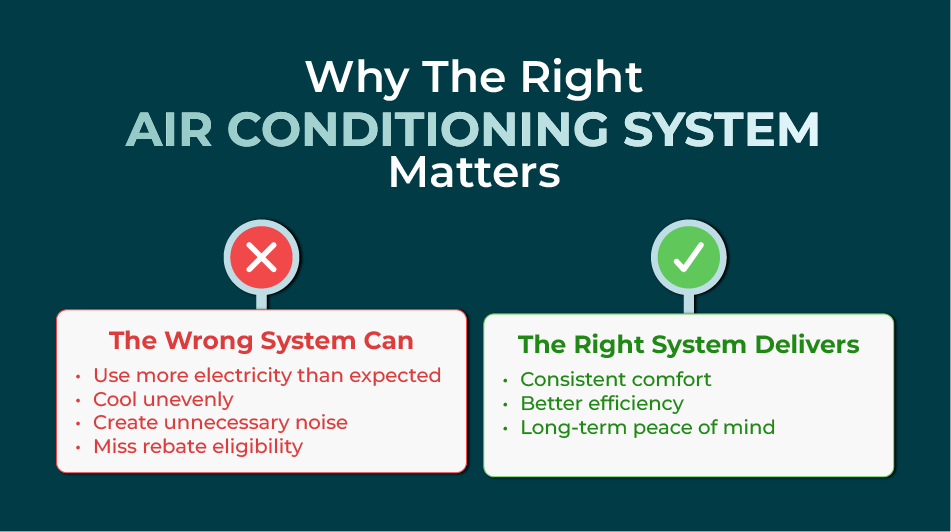
An air conditioner is not just a box that blows cold air. The wrong system can:
- Use more electricity than expected
- Struggle to cool your home evenly
- Create unnecessary noise
- Miss eligibility under a government air conditioning scheme
A well-chosen system, on the other hand, delivers comfort, efficiency, and peace of mind for years.
Common Buying Challenges Homeowners Face
Before understanding the technology, it helps to recognise where things commonly go wrong.
- Choosing by price or brand alone instead of suitability
- Installing the wrong capacity for the home layout
- Underestimating running and servicing costs
- Missing rebate eligibility due to paperwork or installer issues
Most regrets come from rushing the decision.
Understanding Contemporary Air Conditioning Systems
Modern air conditioning systems are significantly more advanced than older models.
Key improvements include:
- Inverter technology that adjusts output instead of cycling on and off
- Quieter operation with better airflow control
- Smart timers and temperature optimisation
- Improved filtration for indoor air quality
These features of the modern air conditioning systems directly affect comfort and electricity use, especially during extended heatwaves.
Types of Air Conditioning Systems in Australia
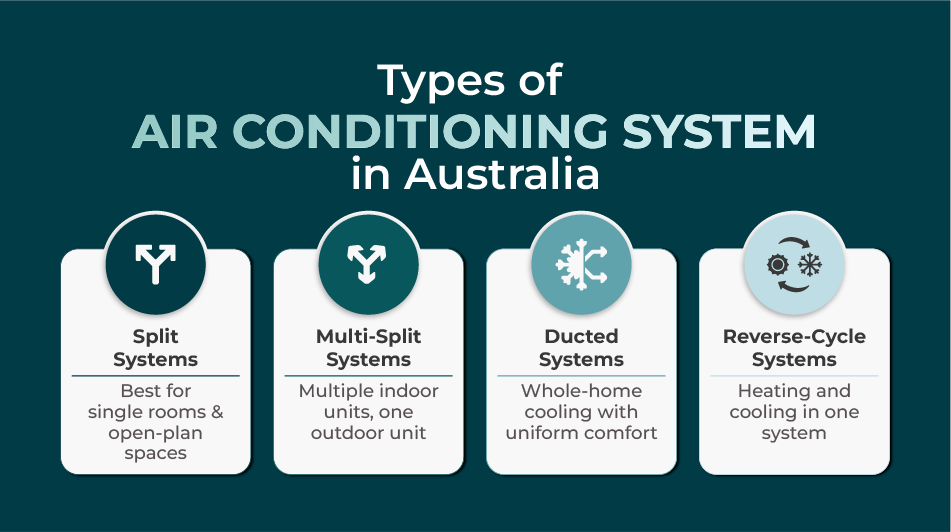
Understanding the types of air conditioning in Australia commonly uses helps narrow your options.
Split Systems
Best for single rooms or open-plan areas. They are cost-effective, efficient, and popular in apartments and smaller homes.
Multi-Split Systems
Allow multiple indoor units connected to one outdoor unit. Useful when ducting is not practical.
Ducted Systems
Designed for whole-home cooling. They offer uniform comfort but require careful design and professional sizing.
Reverse-Cycle Systems
Provide both heating and cooling, making them suitable year-round and increasingly common in residential air conditioning systems.
Each type suits different home layouts and budgets.
Choosing the Right System Size and Capacity
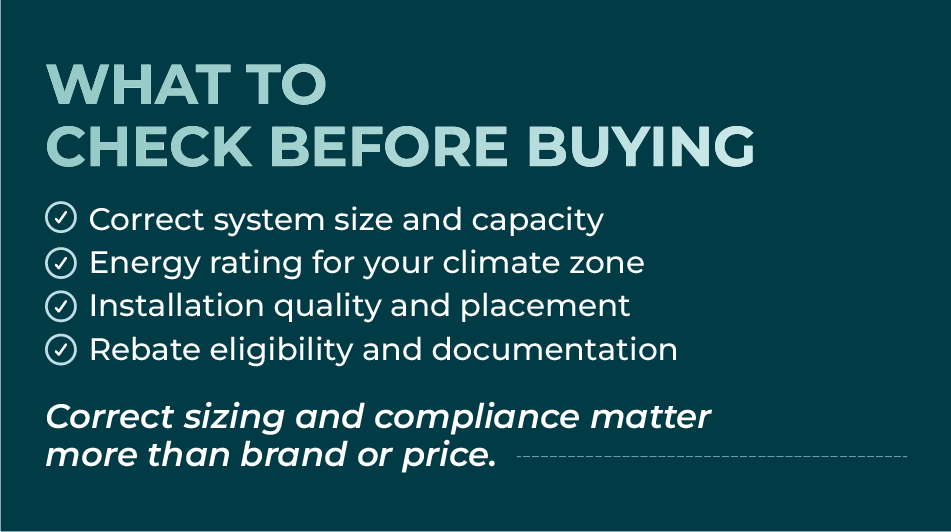
Capacity is one of the most critical factors.
System sizing depends on:
- Room size and ceiling height
- Insulation quality
- Window size and orientation
- Climate zone
Oversized units cycle inefficiently and waste energy. Undersized systems struggle and wear out faster. If a salesperson suggests size without assessing your home, that is a red flag.
Energy Ratings, Climate Zones, and Real-World Efficiency
Australia uses climate-specific energy ratings, which is why two systems with the same label can perform differently.
- Victoria homes prioritise heating efficiency
- Queensland homes prioritise cooling performance
- NSW homes often require balanced year-round efficiency
An energy efficient air conditioning system is one that matches your climate zone and usage habits, not just lab-tested ratings.
Solar Integration and Running-Cost Considerations
Air conditioning and solar work best when planned together.
Smart strategies include:
- Daytime pre-cooling using solar generation
- Timers aligned with peak solar output
- Avoiding unnecessary overnight cooling
Running costs depend on:
- Tariff structure
- Daily usage patterns
- Insulation and shading
- System efficiency
This is why affordable air conditioning is about long-term cost control, not just purchase price.
Govt. Air Conditioning Schemes Explained
A government air conditioning scheme typically supports:
- Approved high-efficiency units
- Accredited installers
- Correct documentation and compliance
Rebates are not automatic. Missing approvals or paperwork can void eligibility.
Air Conditioning Incentives in Victoria (VEU)
The government offers incentives for replacing inefficient systems with approved energy efficient air conditioning system.
Key points:
- Installer must be VEU accredited
- Product must be approved
- Documentation is required after installation
Your installer usually handles the process, but homeowners should still request copies.
Always confirm eligibility, discount value, and system requirements before installation.
Air Conditioning Incentives in NSW (ESS)
The government operates under the Energy Savings Scheme.
Important factors:
- Installation by an authorised provider
- Compliance with approved system requirements
- Correct handover documentation
Eligibility, discount value, and system requirements vary and must be confirmed before installation.
Installation, Warranty, and What to Ask Your Installer
Before agreeing to installation, ask for:
- A sizing assessment
- Proposed system capacity
- Product approval confirmation
- Installer accreditation
- Warranty terms
- Maintenance requirements
This protects both performance and rebate eligibility.
Noise, Indoor Air Quality, and Placement
Comfort is not just temperature.
Consider:
- Outdoor unit placement away from bedrooms
- Indoor airflow direction to reduce drafts
- Filtration quality for allergens and dust
- Humidity control for long-term comfort
These factors heavily influence satisfaction with air conditioning for residential use.
Maintenance and Expected Lifespan
Basic maintenance includes:
- Regular filter cleaning
- Annual professional servicing
Well-maintained systems typically last well over a decade. Warning signs for replacement include rising energy use, uneven cooling, and frequent breakdowns.
Cost and Value Considerations
The cost of an air conditioning system depends on:
- System type and size
- Energy efficiency rating
- Installation complexity
- Insulation quality
- Climate and usage habits
- Rebate eligibility
Value comes from matching the system to how your household actually lives.
Common Mistakes to Avoid
- Oversizing or undersizing the unit
- Buying solely on price or brand claims
- Ignoring rebate paperwork
- Overlooking noise and air quality
- Skipping maintenance planning
Most of these mistakes are avoidable with proper advice.

Final Verdict: Buying the Right Air Conditioning System
The best air conditioning system is one that delivers comfort, efficiency, and compliance without unnecessary complexity.
Focus on:
- Correct sizing
- Energy efficiency
- Approved products and installers
- Long-term running costs
A professional assessment ensures the system works for your home, not against it.
For homeowners who want expert guidance on selecting the right air conditioning system, HiTech Eco Solutions offers practical advice and professional assessments based on real home requirements.
FAQs: Air Conditioning Systems for Australian Homes
It depends on room size, insulation, layout, and climate zone.
Yes, especially for households using cooling frequently.
Often yes, if eligibility and documentation requirements are met.
It depends on your home size and usage needs.
With maintenance, many systems last 10–15 years.
Installer accreditation, product approval, and installation records.